Wai-O-Tapu entry ticket
Self-guided, all-day entry · Open 8:30 to 4:30, last entry 3 pm
✓ Free cancellation
from NZ$ 49
Book on GetYourGuide
Boiling pools and the 10:15 geyser at Wai-O-Tapu, evenings with Te Arawa hosts, rafting over a 7 m waterfall and hot pools by the lake. Compare the tours from Rotorua and book the ones that fit your days.
Geothermal parks open all year · Lady Knox Geyser daily at 10:15 · About 3 hours from Auckland
 Māori cultureTours from NZ$ 30
 Geothermal parksTours from NZ$ 45
 White-water raftingTours from NZ$ 135
 Ziplines and adventureTours from NZ$ 65
 Hot pools and spasTours from NZ$ 46
 Glow-worm toursTours from NZ$ 116
 Scenic flightsTours from NZ$ 270
 Day tripsTours from NZ$ 136
Kiwi, the Agrodome farm, the Duck Tour, mountain biking and more
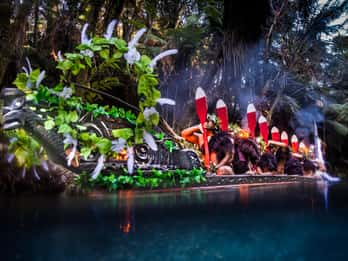
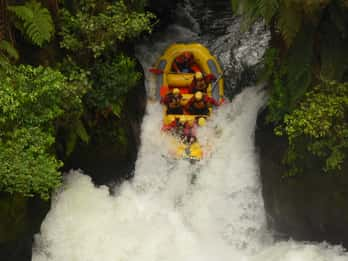
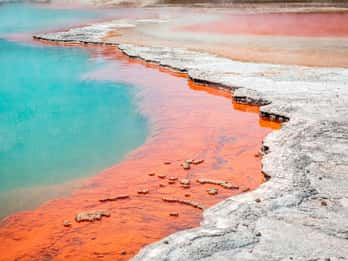
Entry to Wai-O-Tapu with the Lady Knox Geyser, a three-hour evening at Mitai with a waka, haka and hāngī buffet, and the Kaituna River with Kaitiaki Adventures, about an hour on the water and over Tutea Falls.
Self-guided, all-day entry · Open 8:30 to 4:30, last entry 3 pm
✓ Free cancellation
from NZ$ 49
Book on GetYourGuideEvening, performance and hāngī buffet · About 3 hours
✓ Free cancellation
from NZ$ 179
Book on GetYourGuideGrade 5 rafting, about 1 hour on the water · About 3 hours door to door
✓ Free cancellation
from NZ$ 139
Book on GetYourGuideLake Rotorua fills a volcanic caldera that formed about 200,000 years ago. The lake is about 12 km long and 10 km wide, and its full name is Te Rotoruanui-a-Kahumatamomoe. Mokoia Island, a lava dome, rises 179 m from the water. The lakes are the home of the iwi of Te Arawa. In the 19th century Te Arawa guides led visitors to the hot springs, and in the early 1880s the government laid out the town as a base for visitors to the hot lakes.
Geothermal activity is part of daily life here. Te Ara counts more than 500 hot springs at Whakarewarewa on the edge of town, where Te Puia and the living village sit side by side. South of town, Wai-O-Tapu covers 18 km² of geothermal ground, and Waimangu was created by the eruption of Mount Tarawera on 10 June 1886, which also destroyed the Pink and White Terraces. Northeast of town, Hell’s Gate at Tikitere offers mud baths. The Whakarewarewa Forest, where the first redwoods were planted in 1901, covers more than 5,600 ha and has walking and mountain bike trails.
The Rotorua Museum in the Government Gardens has been closed since late 2016, and the council expects it to reopen in 2027 or 2028. For planning, see the month-by-month guide, getting there and the itineraries.
No. Discover Rotorua is an independent guide. The official tourism organisation is RotoruaNZ (rotoruanz.com), owned by the Rotorua Lakes Council, which also runs the Rotorua i-SITE visitor centre at 1167 Fenton Street. RotoruaNZ uses the words “Discover Rotorua” on its own website; this guide has no connection with it.
At Wai-O-Tapu the Lady Knox Geyser is set off every morning at 10:15; the park asks you to arrive by 09:45. At Te Puia, Pōhutu erupts up to 20 times a day according to the operator, but the times are not fixed, so an eruption during your visit cannot be promised.
About 230 km, just under three hours by car without stops. InterCity buses take about four hours, and Air New Zealand flies direct from Auckland, Wellington and Christchurch to Rotorua Airport.
Two days cover Wai-O-Tapu and Waimangu, Te Puia and the Whakarewarewa village, the Redwoods and a hāngī evening. A third day leaves room for rafting, Hell’s Gate or the Buried Village at Lake Tarawera.
Any month. February is the warmest, with an average high of 23.1 °C, and July the coolest and wettest, at 12.0 °C and 137 mm (NIWA, 1991–2020). The parks, cultural evenings and hot pools open all year.
Tours from NZ$ 30
Compare tours